Loading...
History
The arena, the club and all those names — the story of Sandefjord's home ground
Jotun Arena is one of the younger grounds in Norway's top flight, yet it has packed more into its short life than most: a club born from a partnership between two town rivals, a build that moved top-level football out of Bugårdsparken, and a naming saga almost without parallel in Norwegian football. Here is the full story.
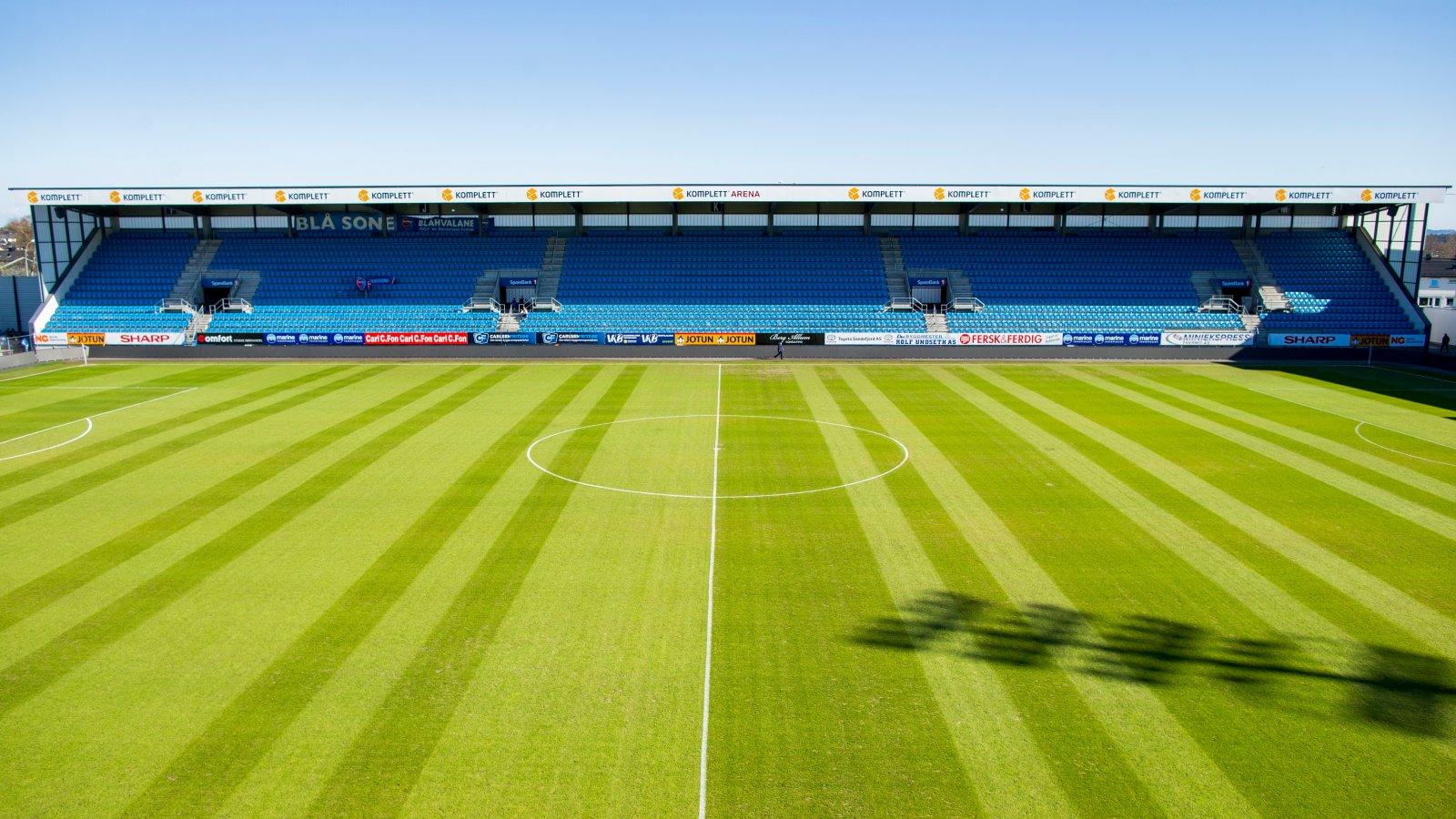
The Arena and the Build
When Sandefjord Fotball reached Norway's top division for the 2006 season, it quickly became clear that Storstadion in Bugårdsparken — the club's home since its debut campaign in 1999 — could no longer meet top-flight requirements. The answer was a brand-new arena at Pindsle, a couple of kilometres outside the town centre, built at a cost of around NOK 100 million and owned by the club itself.
The arena was completed midway through the 2007 campaign, the club's second at the top level, and the opening on 21 July 2007 turned into a celebration: Sandefjord beat Lyn 3–0 in front of 8,103 spectators, a figure that remains the ground's attendance record to this day. The current capacity is 6,582, every seat of it under cover, and the pitch measures 105 by 68 metres.
For sixteen seasons football here was played on natural grass. After a long debate over pitch quality, the club decided in 2023 to make the switch, and since the 2024 season matches have been played on artificial turf — turning the arena into a true year-round home for football in the town.
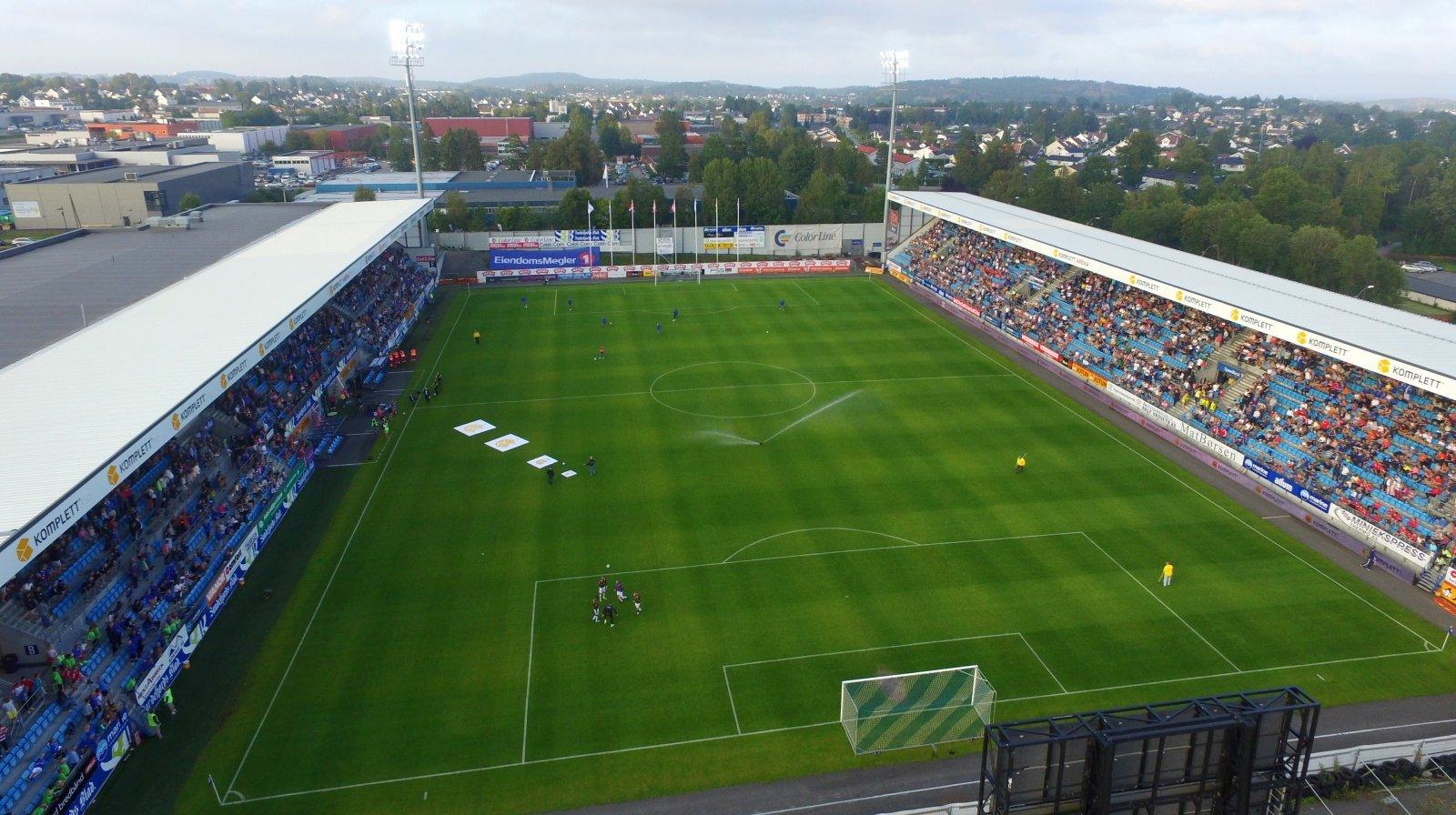
The Club's Journey
Sandefjord Fotball is a young club with an eventful past. It was founded on 10 September 1998 as an elite-football partnership between Sandefjord Ballklubb and IL Runar, created to pool the town's best footballing resources into a single top side. The debut season in 1999 began in the third tier of Norwegian football and ended with the divisional title and instant promotion.
After first reaching the top flight in 2006, the club became something of a yo-yo side, suffering relegation in 2007, 2010, 2015 and 2018 — but bouncing back every time. For years, eighth place in 2009 stood as the club's best top-flight finish. Since winning promotion ahead of the 2020 season, however, Sandefjord have established themselves in Eliteserien, and 2025 shattered the old mark: a remarkable fifth place, ahead of giants such as Molde and Rosenborg.
The arena is home to both the men's and the women's team, and over the years it has staged everything from nerve-shredding relegation battles to nights of promotion joy and club records.
The Name Game
Few Norwegian grounds have changed names as often as this one. From the 2007 opening it was known as Komplett.no Arena, under a ten-year deal worth NOK 15 million with online retailer Komplett, headquartered in Sandefjord. In time the name was simplified to Komplett Arena.
When that sponsorship ended in November 2019, the ground was left without a naming partner and became simply Sandefjord Arena. On 5 May 2021 the club signed a three-year deal, with an option for three more, with Release, a local mobile operator — and the venue turned into Release Arena.
The current name arrived on 5 September 2023, when paint manufacturer Jotun — one of the town's best-known industrial companies — took over the naming rights, giving the arena a name with deep roots in Sandefjord: Jotun Arena.
The naming saga also tells a story about the town itself: all three naming sponsors — Komplett, Release and Jotun — are Sandefjord companies. However often the signs on the facade have changed, the ground has never carried a name from anywhere but local business.
The Arena Today
Jotun Arena is among the more compact venues in Norway's top division, and that is precisely its strength: supporters sit right on top of the pitch, every seat is covered, and on big days the home crowd generates an intensity that far larger stadiums would envy.
Alongside Eliteserien fixtures, the ground hosts women's football and other events, serving as a natural hub for the game in Vestfold. Because the club owns the arena outright, it is more than a matchday venue — it is Sandefjord Fotball's own house rather than a rented stage.
With a year-round artificial surface, modern facilities and a club fresh off the strongest season in its history, the future looks bright for the home ground at Pindsle — whatever name it may carry a few years from now.